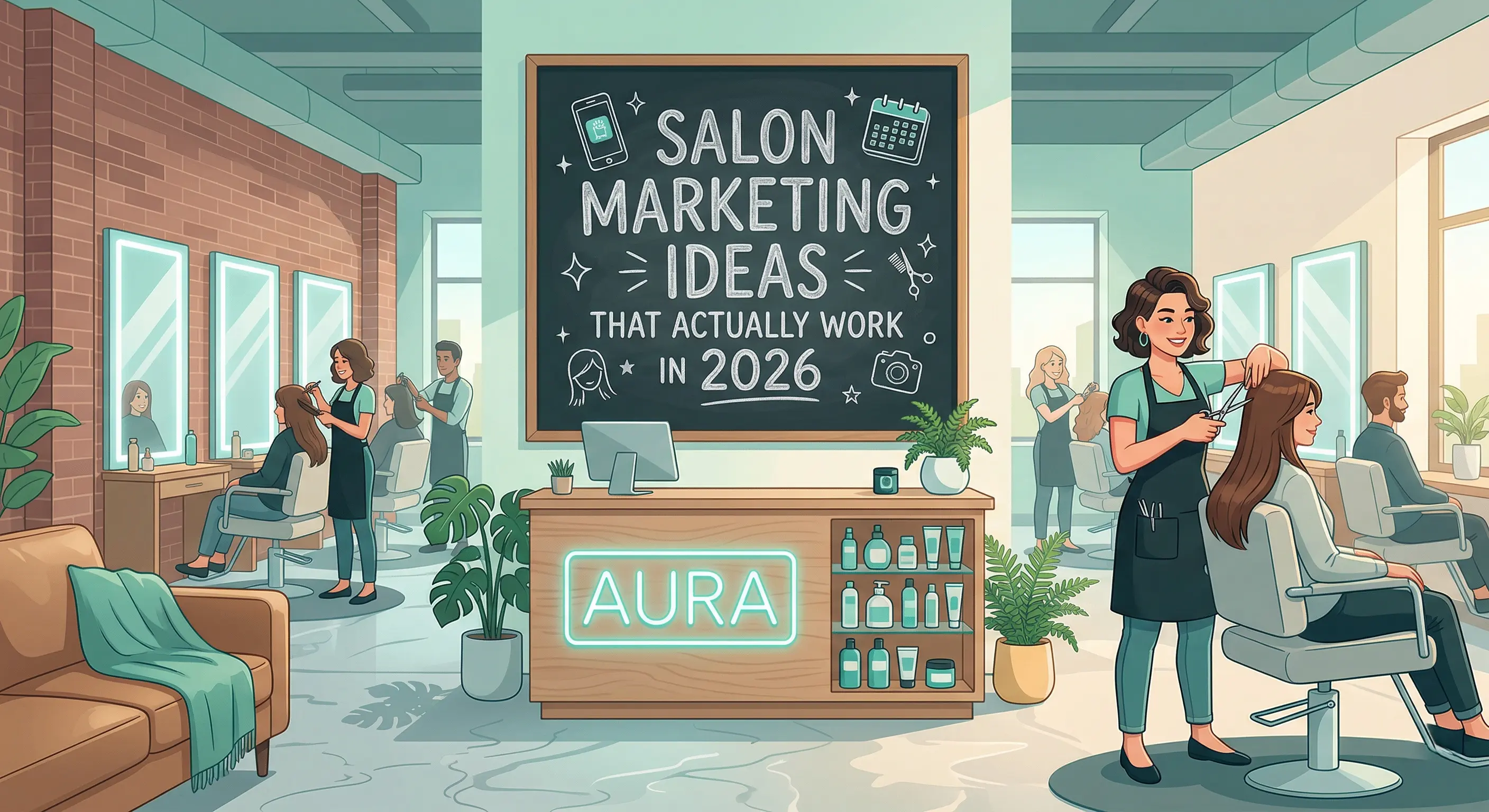
Salon marketing that performs in 2026 is built on operational trust. If the service flow is unclear, traffic growth alone will not produce revenue growth.
Start with channel alignment. Your Google visibility, social messaging, and in-shop experience should communicate the same promise: predictable service, transparent queue, and clear value.
Use local intent pages to capture near-me demand. Users searching in real time should find clean city and service pages with accurate details.
Improve conversion by exposing live queue status publicly. Customers are more likely to commit when they can estimate actual waiting.
Adopt QR guest onboarding in-store. This lowers check-in friction for new visitors and prevents front-desk bottlenecks during busy windows.
Bundle offers strategically. Show all active discounts in one place and map each offer to a clear service category so users can act quickly.
Build repeat loops through post-visit reminders and personalized category nudges. Retention compounds faster than constant new-user acquisition.
Track the right metrics
queue-to-service completion rate, offer conversion rate, repeat interval, and category-level demand stability.
Train staff on communication consistency. A good campaign fails when in-store messaging is unclear or contradictory.
NumberApp helps execute this full stack by combining queue clarity, guest onboarding speed, and customer-side offer visibility in one flow.
The best marketing idea remains simple
remove friction from discovery to service completion, then make it easy for satisfied users to return.
Detailed strategy for Salon Marketing Ideas That Actually Work in 2026
Teams trying to rank for salon marketing ideas often publish short opinion-style posts, but search engines and users reward practical detail. A strong article should answer intent across awareness, consideration, and action stages. That means defining the problem clearly, showing operational examples, and giving decision frameworks that can be used immediately. For marketing audiences, this also includes real-world constraints like peak-hour pressure, staff availability, and customer patience windows. In content terms, depth is not about filler text. It is about reducing ambiguity for the reader so they can take action with fewer assumptions.
How customers evaluate options
People comparing salons or salon software typically ask six hidden questions: Is this reliable, is this fast, is this affordable, is this transparent, is this easy for first-time users, and will this be consistent every week? Content should map directly to those questions. Mention queue visibility, onboarding speed, offer clarity, service context, and post-visit confidence signals. For salon promotion strategy, practical trust indicators matter more than claims. Show how users can verify wait-time context, compare offers in one place, and understand what happens after check-in. The easier your page makes this evaluation, the higher your conversion probability.
How owners should execute this in operations
Owner-side execution needs a playbook, not disconnected tips. Start with queue discipline, then align appointment flow, then tighten reception onboarding. Add QR guest entry to reduce manual bottlenecks. Keep service and price catalogs centralized so staff and users see one source of truth. Attach discount logic to category and timing rules so offers do not erode margins. Then monitor daily execution metrics before scaling campaigns. This sequence matters because marketing traffic without operational readiness creates negative reviews and lower retention. For posts around salon marketing ideas, operational sequencing should always be explicit and measurable.
Content-to-revenue connection model
A blog post should not stop at education. It should move readers toward clear product value and action. Use a simple conversion narrative: problem visibility, workflow clarity, proof of reduced friction, then call-to-action based on user type. For customers, CTA can be queue checking or offer discovery. For owners, CTA can be operations audit, queue setup, or team workflow standardization. This approach prevents generic endings and helps search traffic convert better. In high-competition terms like salon promotion strategy, conversion-aware structure is often the difference between traffic and actual business impact.
Measurement framework for continuous improvement
After publishing, track outcomes in three layers. Layer one is SEO visibility: impressions, ranking movement, and click-through rate by query cluster. Layer two is engagement quality: scroll depth, average read time, and return visits. Layer three is operational conversion: queue joins, guest check-ins, offer interactions, and completed services linked to content entry points. Use these metrics to revise weak sections instead of publishing random new posts. Continuous optimization improves topical authority faster than volume-only publishing. This is especially important when building authority around salon marketing ideas and related long-tail intent queries.
Execution checklist for the next 90 days
Week 1-2, tighten on-page clarity and update internal links between related blog and city/service pages. Week 3-4, strengthen schema coverage and image relevance per post. Week 5-6, publish supporting articles that answer adjacent intent and reduce keyword cannibalization. Week 7-8, collect user behavior signals and refine underperforming sections. Week 9-10, launch review and testimonial capture flows to strengthen trust signals. Week 11-12, audit conversions from content to product actions and improve CTA placement. This schedule creates a repeatable authority system instead of one-time publishing bursts.
Editorial quality standard for future posts
Every new article should include five essentials before publishing. First, one clear user problem statement. Second, one operational framework with actionable steps. Third, one evidence layer from product behavior or customer pattern. Fourth, one implementation checklist that can be executed in under a week. Fifth, one conversion bridge that connects the article to a meaningful product action. If any of these five pieces are missing, content quality drops even if word count is high. This standard keeps your blog consistent, useful, and easier for Google to trust over time.
How to avoid topic overlap while scaling content
Build a topic map by audience and intent before writing. Customer-intent pages should target convenience, waiting reduction, service selection, and offer clarity. Owner-intent pages should target operations, team productivity, conversion systems, and revenue stability. City/service pages should target local discovery intent. Keep one primary keyword cluster per URL and assign clear secondary clusters for internal linking support. This process prevents cannibalization and helps each page earn a distinct ranking role. Over 3-6 months, this structure improves topical authority more reliably than publishing many near-duplicate posts.
Final practical takeaway
Content works best when product truth is clear. Show real workflows, define expected outcomes, and make next actions obvious for both customers and owners. This is how blog traffic becomes trusted discovery and repeat business instead of one-time page views.